
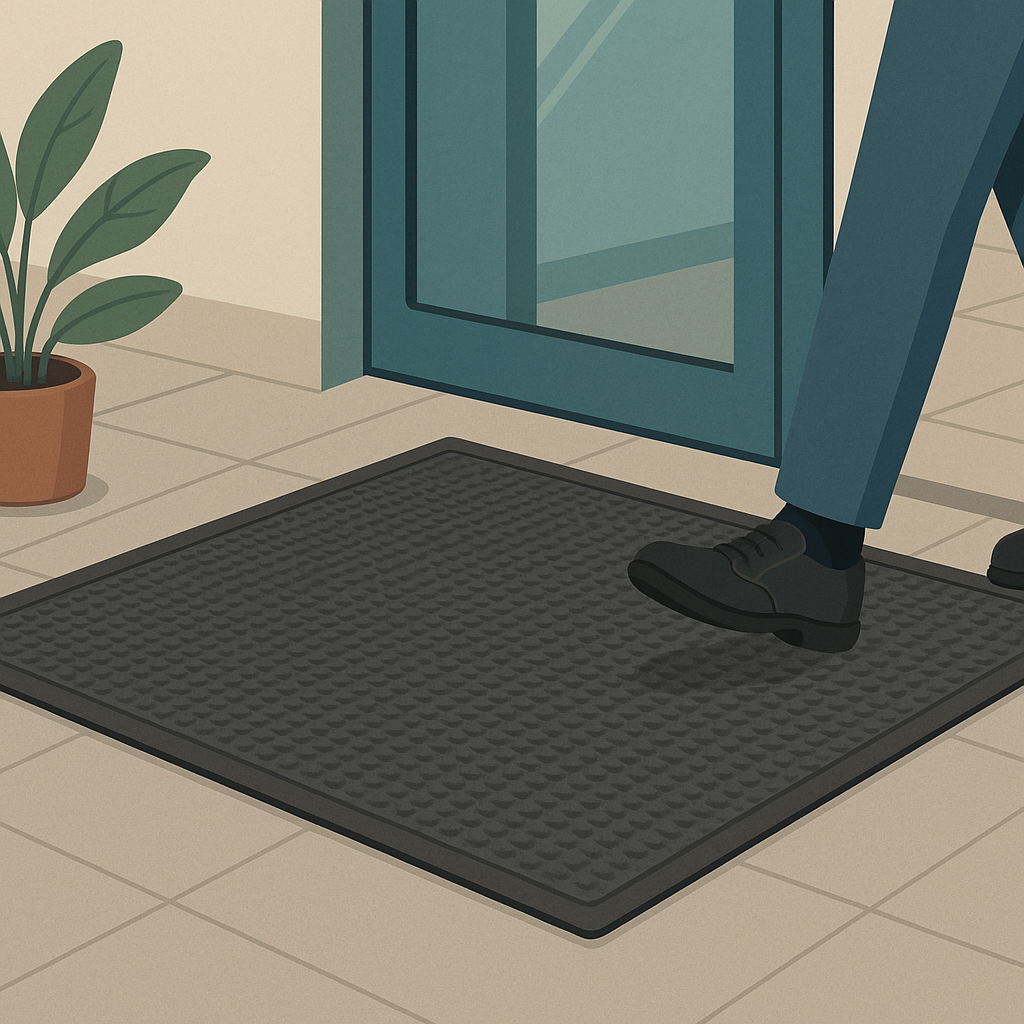
The relentless battle against dirt, dust, and moisture being tracked into your building is more than just an annoyance—it’s a serious operational challenge. Did you know that according to industry experts, as much as 80% of the dust, dirt, and grime in a public building is tracked in from the outside on people’s shoes? This influx of debris not only ruins the appearance of your floors but also poses significant safety risks and financial burdens. The first and most effective line of defense in this ongoing war is a high-quality indoor absorbent mat.
These specialized mats are engineered to do exactly what their name implies: absorb moisture and trap dirt that outdoor scraper mats may have missed. By strategically placing absorbent mats at your entrances, you can dramatically improve safety, reduce cleaning costs, and preserve the longevity and beauty of your interior flooring.

The Hidden Costs of Uncontrolled Dirt and Moisture
Overlooking the importance of an effective entrance matting system can lead to a cascade of expensive and dangerous problems. Understanding these risks highlights why investing in proper matting is a sound business decision.
- Safety Hazards: Slips, trips, and falls are a leading cause of workplace injuries. The Centers for Disease Control and Prevention (CDC) identifies them as a major hazard, particularly in service industries. Wet, slippery floors from tracked-in rain and snow are a primary culprit. A high-performance absorbent mat keeps floors dry, significantly reducing the risk of accidents and potential liability claims.
- Expensive Floor Damage: Dirt and grit act like sandpaper. With every footstep, these abrasive particles are ground into your flooring, causing scratches, scuffs, and a dull, worn-out appearance. Moisture is equally destructive, capable of warping hardwood floors, staining grout lines, and causing laminate flooring to peel or bubble. The cost of repairing or replacing damaged flooring far exceeds the cost of preventive matting.
- Poor Indoor Air Quality: The debris tracked indoors isn’t just dirt. It can include allergens, pollutants, bacteria, and chemicals from sidewalks and parking lots. As these particles become airborne, they can degrade indoor air quality, which the Environmental Protection Agency (EPA) notes can have short-term and long-term health effects. Mats trap these contaminants at the door, helping to maintain a healthier environment for employees and visitors.
- Increased Cleaning Costs: There’s a direct correlation between the amount of dirt tracked in and the cost of cleaning. Industry sources, like the ISSA (The Worldwide Cleaning Industry Association), have estimated that it can cost hundreds of dollars to remove just one pound of dirt once it’s dispersed throughout a building. By capturing that dirt at the entrance, absorbent mats drastically cut down on the labor, time, and supplies needed to keep your facility clean.
How Do Indoor Absorbent Mats Work?
The effectiveness of an indoor absorbent mat lies in its construction—specifically, its face fibers and backing material. These components are engineered to work together to scrape, trap, and hide dirt and moisture efficiently.
Matting Materials
The type of fiber used for the mat’s surface determines its ability to absorb water, trap dirt, and withstand foot traffic.
- Nylon: Widely regarded as the premium choice for high-traffic commercial areas. Nylon fibers are incredibly resilient, crush-resistant, and have excellent water absorption capabilities. They spring back to shape after being stepped on, continuing to effectively wipe shoes.
- Polypropylene: This synthetic fiber is highly stain-resistant and quick-drying. While not as crush-resistant as nylon, its ability to retain water and resist fading makes it a durable and popular choice for many applications.
- Cotton & Natural Fibers: Cotton can hold a large amount of water, but it becomes saturated quickly and can take a long time to dry. This can lead to mildew and a less effective mat in persistently wet conditions. They are often better suited for lower-traffic, residential use.
Backing and Edging
The backing is just as crucial as the surface. A 100% nitrile rubber backing is the industry standard for high-performance mats. It offers superior durability, remains flexible in all temperatures, and is resistant to grease and oils. Unlike cheaper vinyl alternatives that can crack and curl, nitrile rubber provides a non-slip grip that keeps the mat securely in place. Furthermore, beveled “ramped” edging allows for a smooth transition from the floor to the mat, preventing trips and allowing wheeled carts to pass over easily.

Choosing the Right Absorbent Mat for Your Needs
Not all mats are created equal. The right choice depends on your specific environment and traffic levels.
Key Features to Look For:
- Bi-Level Construction: Look for mats with a textured pattern featuring coarse, heavy fibers for scraping and fine, absorbent fibers for wiping. The coarser fibers are lower, creating channels that trap dirt and water below shoe level, preventing it from being tracked further.
- High Water Retention: Check the mat’s capacity, often measured in gallons per square yard. A higher retention rate means the mat can handle more moisture before becoming saturated.
- Crush Resistance: For areas with heavy foot traffic, shopping carts, or wheelchairs, choose a mat with high-density, crush-resistant fibers like nylon to ensure it keeps performing over time.
- Certified High-Traction: For ultimate safety, look for mats certified by the National Floor Safety Institute (NFSI), which provides a “High-Traction” rating to products that meet rigorous standards for slip resistance.
Best Practices: The Three-Zone Entrance Matting System
For maximum effectiveness, absorbent mats should be part of a comprehensive, three-zone system. This professional approach ensures up to 98% of all contaminants are removed from shoes before they enter your building.
- Zone 1: Outdoor Scraper Mats: The first line of defense. These aggressive mats are designed to remove heavy soil, mud, and snow. They are typically made of durable rubber or have abrasive surfaces.
- Zone 2: Scraper/Wiper Mats: Placed in a vestibule or just inside the main entrance, these mats scrape off remaining smaller dirt particles and absorb a large amount of moisture.
- Zone 3: Indoor Wiper/Absorbent Mats: This is the final stage, where fine dust and remaining moisture are wicked away. This is the primary role of the absorbent mats discussed in this guide. For this system to be effective, facility management professionals recommend a minimum of 15 to 30 feet of total matting length.
Conclusion: An Investment in Cleanliness and Safety
An indoor absorbent mat is far more than just a piece of carpet at your door. It is an essential tool in a complete system designed to protect your facility, ensure the safety of your occupants, and control your maintenance budget. By capturing dirt and moisture at the source, these mats prevent slip-and-fall accidents, preserve the life and look of your expensive flooring, improve indoor air quality, and save you money on cleaning costs.
Investing in a high-quality, durable absorbent matting system is one of the smartest, most cost-effective decisions you can make for your building’s maintenance and risk management program. Stop dirt and moisture in their tracks and create a cleaner, safer, and more welcoming environment for everyone.
