
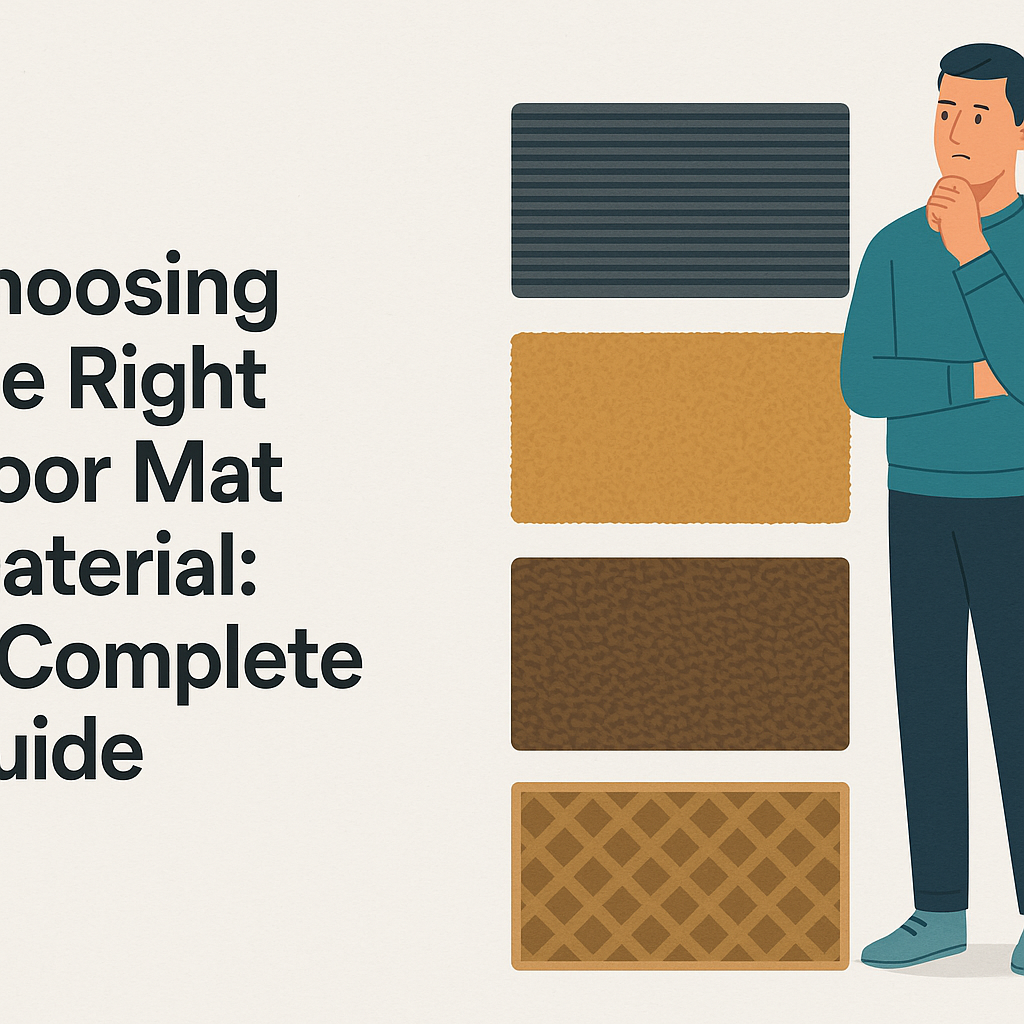
A door mat is more than just a welcoming gesture; it’s your first line of defense against the dirt, debris, and moisture tracked into your building. A high-quality entrance mat is a critical investment in the cleanliness, safety, and longevity of your floors. But with a vast array of materials available, how do you choose the right one? The material you select determines a mat’s effectiveness, durability, and overall value.
According to the ISSA (The Worldwide Cleaning Industry Association), up to 80% of the dust, dirt, and grime in a public building is tracked in on the feet of visitors. This makes choosing the right mat material essential not just for appearance, but for operational efficiency and safety.

Why Your Door Mat Material Matters
The performance of a door mat is directly tied to its material composition. The right material will effectively scrape off heavy debris, absorb moisture, and hold onto fine dust particles. This has several key benefits:
- Improved Air Quality: By trapping dust and allergens at the door, mats prevent them from becoming airborne and circulating throughout your space.
- Reduced Cleaning Costs: Industry studies have shown that it can cost over £500 to find and remove just one pound of dirt once it’s inside a building. An effective matting system drastically cuts down on janitorial time and expense.
- Enhanced Safety: Slips, trips, and falls are a major cause of workplace and home injuries. The Occupational Safety and Health Administration (OSHA) identifies them as a leading hazard. Mats with high water absorption and non-slip backing are crucial for preventing accidents, especially in wet weather.
- Floor Protection: Dirt and grit are abrasive. They act like sandpaper on your expensive flooring, whether it’s hardwood, tile, or laminate, leading to premature wear and tear.
A Breakdown of Common Door Mat Materials
Understanding the pros and cons of each material is key to making an informed decision. Let’s explore the most common options available for commercial and residential use.
Coir (Coconut Fibre)
Coir is a traditional, natural fibre extracted from the husk of coconuts. Its bristly texture and classic look have made it a popular choice for decades.
- Pros: Excellent at scraping mud and heavy dirt, highly absorbent, eco-friendly and biodegradable.
- Cons: Prone to shedding fibres, can rot or mildew if it remains saturated with water, and the natural fibres can break down under heavy commercial traffic.
- Best For: Covered outdoor entryways in residential or low-traffic commercial settings where a rustic aesthetic is desired.
Rubber
Rubber is one of the most durable and versatile matting materials. It can be used as a standalone mat or as a heavy-duty backing for other mat types.

- Pros: Extremely tough and weather-resistant, provides excellent non-slip traction, and is highly effective at scraping off coarse debris, mud, and snow. Often made from recycled materials.
- Cons: Can be heavy, may have a noticeable rubber smell initially, and dark colours can absorb heat in direct sunlight. Not effective at absorbing water.
- Best For: High-traffic outdoor entrances, industrial applications, kitchens, and any area where slip resistance and durability are paramount.
Polypropylene
Polypropylene is a synthetic plastic fibre that has become a go-to material for modern entrance mats. It’s known for its “Water Hog” or “Aqua Trap” style construction, featuring a raised, crush-resistant surface pattern.
- Pros: Quick-drying, resistant to mould, mildew, stains, and fading from sunlight (solution-dyed). It offers a good balance of scraping and water absorption.
- Cons: While durable, it can eventually crush under extremely high, multi-directional traffic compared to premium nylon.
- Best For: All-purpose indoor or outdoor use in both commercial and residential settings. It’s a fantastic, reliable choice for most entryways.
Nylon
Nylon is a premium synthetic fibre, widely regarded as the top-tier material for high-performance commercial matting, especially for logo mats.
- Pros: Unmatched crush resistance and resilience (it “bounces back” underfoot), superior water absorption, excellent at trapping fine dust, and offers brilliant colour and print clarity for logos.
- Cons: Typically the most expensive option.
- Best For: High-traffic indoor commercial areas like corporate lobbies, hotels, and retail stores where appearance, durability, and branding are top priorities.
Vinyl
Vinyl is another durable synthetic material, often seen in a “spaghetti” or looped construction. This design creates a mat that is excellent for drainage and scraping.
- Pros: Highly resistant to grease, oils, and chemicals. The loop design traps dirt and liquid, keeping it from being tracked further while maintaining a clean top surface. Easy to clean by simply hosing it down.
- Cons: Not designed for water absorption or drying.
- Best For: Wet areas like pool decks, locker rooms, and commercial kitchens. Also effective as a first-line outdoor scraper mat in very wet or snowy climates.
The 3-Mat System for Ultimate Floor Protection
For commercial facilities, experts often recommend a “3-mat system” to ensure maximum floor protection, as highlighted by publications like Facility Executive. This system designates a specific mat type for each zone of entry:
- The Scraper Mat (Outdoor): An aggressive rubber or vinyl loop mat to remove heavy soil and moisture.
- The Scraper/Wiper Mat (Vestibule): A polypropylene mat that scrapes remaining particles and absorbs a large amount of water.
- The Wiper Mat (Indoor): A nylon or carpet-topped mat to absorb the last of the moisture and trap fine dust.

Conclusion: Making the Right Investment
Choosing the right door mat material is a strategic decision that pays dividends in safety, cleanliness, and cost savings. For outdoor areas and heavy debris, rubber and vinyl are champions of durability and scraping. For a versatile indoor/outdoor solution, polypropylene offers a perfect balance of scraping, absorption, and resilience. For high-traffic, high-impression indoor areas where performance and branding are key, nylon stands as the premium choice. Finally, coir offers a classic, eco-friendly option for less demanding, covered residential areas.
By assessing your traffic levels, location (indoor vs. outdoor), and primary goal (scraping vs. wiping), you can confidently select a mat that will protect your floors and keep your space clean and safe for years to come.
