
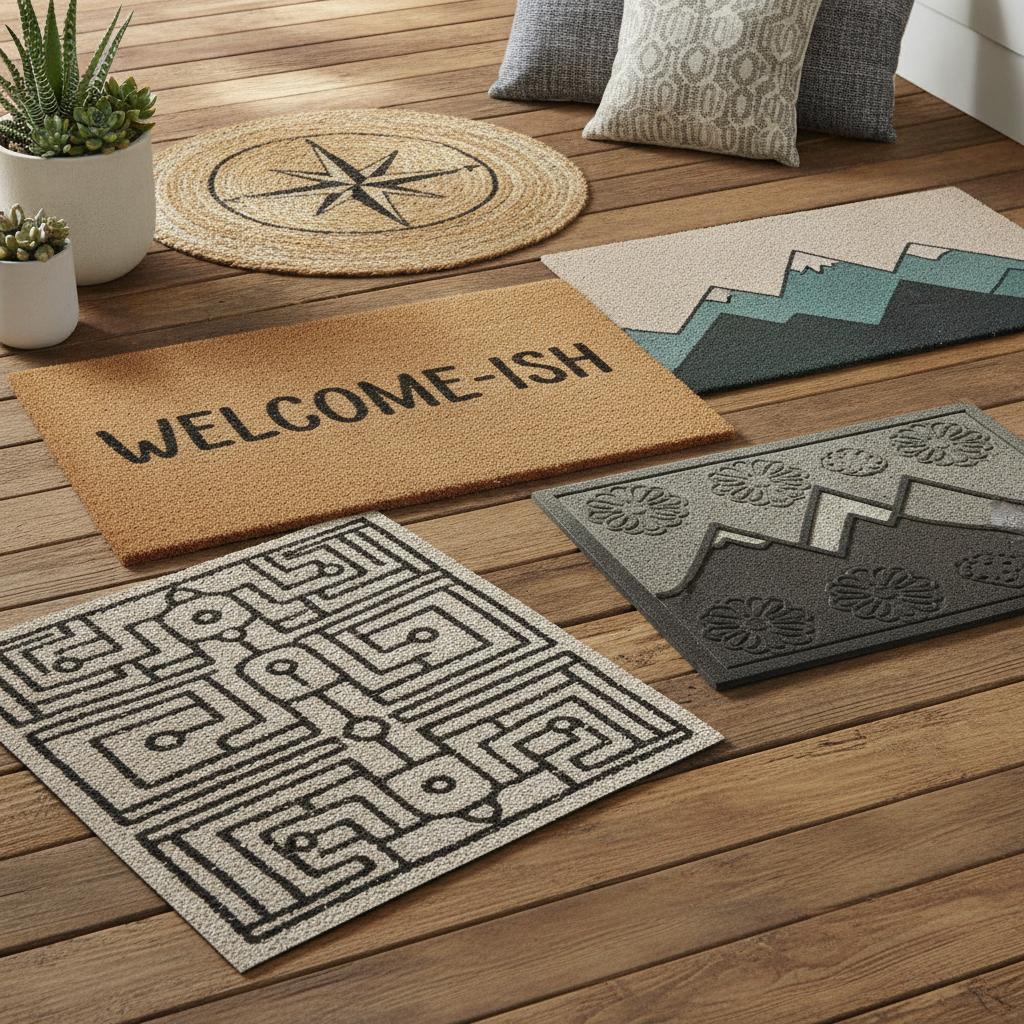
First impressions matter, and nowhere is this truer than at the entrance to your home or business. A well-chosen doormat does more than just greet visitors; it acts as a crucial first line of defence against dirt, moisture, and debris, protecting your interior flooring and enhancing safety. But with a bewildering array of materials available, how do you choose the right one?
This comprehensive guide will help you navigate the world of doormat materials, exploring their unique properties, benefits, and ideal applications. Understanding the characteristics of each material is key to making an informed decision that meets your specific needs, whether for a bustling commercial entrance, a high-traffic industrial zone, or a cozy residential doorstep.
Why Doormat Material Matters: More Than Just Aesthetics
The material of your doormat is paramount because it directly impacts its effectiveness, durability, and overall suitability for its environment. A mat made from the wrong material might quickly wear out, fail to capture dirt, or even become a safety hazard. Conversely, the right material can significantly extend the life of your interior flooring, reduce cleaning costs, and prevent slips and falls.
- Dirt & Moisture Control: Different materials excel at scraping off dirt, absorbing moisture, or both.
- Durability & Longevity: Some materials withstand heavy foot traffic and harsh weather conditions better than others.
- Safety: Anti-slip properties are crucial, especially in commercial and industrial settings.
- Maintenance: Ease of cleaning varies greatly between materials.
- Aesthetics & Branding: The material contributes to the mat’s appearance and how well it can incorporate branding.
Key Factors to Consider When Choosing Your Doormat Material
Before diving into specific materials, consider these critical factors:
- Traffic Level: How many people will walk over the mat daily? Light (residential), medium (small office), or heavy (retail, industrial)?
- Location (Indoor/Outdoor): Outdoor mats need to withstand UV, rain, and extreme temperatures. Indoor mats focus more on moisture absorption and fine dust.
- Environmental Conditions: Is the area prone to excessive wetness, grease, chemicals, or extreme temperatures?
- Specific Function: Do you need anti-fatigue properties, static dissipation, or highly aggressive scraping?
- Design & Branding: Does the mat need to complement an aesthetic or feature a custom logo?
Exploring Popular Doormat Materials and Their Best Uses
1. Coir (Coconut Fibre) – The Natural Scraper
Coir mats are a classic choice, renowned for their stiff, bristly fibres harvested from coconut husks. They offer a rustic charm and excellent scraping capabilities, making them ideal for removing mud and grit from shoes.
- Pros: Excellent for scraping dirt and debris, natural and eco-friendly, good for outdoor use (under cover).
- Cons: Can shed fibres, not ideal for heavy moisture absorption, prone to fading in direct sunlight, can become waterlogged if fully exposed.
- Best For: Residential entrances, sheltered outdoor areas, light-to-medium commercial use where a natural look is desired. For a wide range of natural mats, visit IdealMats.co.uk.
According to research, coir fibres are naturally resistant to rot and mould, making them durable for outdoor conditions as long as they aren’t constantly saturated. Source: ScienceDirect
2. Rubber – The Resilient Workhorse
Rubber mats are synonymous with durability, resilience, and safety. Available in various forms, from heavy-duty entrance mats to anti-fatigue solutions, rubber is incredibly versatile.
- Pros: Extremely durable, weather-resistant (great for outdoor exposure), excellent anti-slip properties, easy to clean, resistant to grease and chemicals (depending on rubber type), anti-fatigue options available.
- Cons: Can be heavy, less aesthetically diverse than carpet mats, some types can have a distinct odour.
- Best For: High-traffic commercial entrances, industrial settings, kitchens, workshops, gyms, outdoor areas requiring robust performance. Explore heavy-duty rubber solutions at SpecialistMats.co.uk.
Rubber’s inherent elasticity and grip make it a superior choice for preventing slips, especially in environments prone to moisture or oil. Source: OSHA (referring to floor surfaces and prevention of slips).
3. Carpet/Textile (Nylon, Polypropylene) – The Absorbent & Aesthetic Choice
Carpet or textile mats, often made from synthetic fibres like nylon or polypropylene, are excellent for trapping moisture, fine dust, and dirt. They offer a vast array of colours, patterns, and customisation options.
- Nylon: Highly durable, excellent moisture absorption, good colour retention, crushes less than polypropylene.
- Polypropylene: More budget-friendly, good moisture wicking, stain-resistant, but can flatten with heavy traffic.
- Pros: Superior moisture absorption, wide range of designs and colours, ideal for logo mats and branding, comfortable underfoot, effective for indoor fine dirt.
- Cons: Less aggressive scraping than coir or rubber, can show wear in extremely high-traffic areas if not high-grade, can require more thorough cleaning to remove embedded dirt.
- Best For: Indoor commercial entrances (offices, retail, hotels), residential interiors, reception areas, branding and marketing. For premium logo mats, check out PremierLogoMats.eu and SpecialistLogoMats.co.uk.
Synthetic fibres like nylon are engineered to wick away and trap moisture effectively, preventing it from being tracked further into a building. Source: Textile World (discussing nylon fiber properties).
4. Vinyl (PVC) – Versatile & Hygienic
Often used for its durability, chemical resistance, and ease of cleaning, vinyl can be found as a backing material for many mats or as the primary surface in specific applications like spaghetti loop (noodle) mats or open-grid designs.
- Pros: Excellent water drainage (open-grid designs), chemical and grease resistant, anti-slip, easy to clean, often lightweight.
- Cons: Less aesthetic appeal for main entrances, can become brittle in extreme cold, not as good for fine dust trapping.
- Best For: Wet areas (swimming pools, locker rooms), industrial workstations, laboratories, kitchens, as a durable backing for other mat types.
PVC’s non-porous surface makes it highly resistant to chemicals, oils, and moisture, contributing to its hygienic properties and ease of maintenance. Source: Vinyl Institute
5. Aluminium/Rigid Systems – The Architectural Solution
For high-end commercial and public buildings, modular aluminium or rigid entrance matting systems offer an unparalleled level of performance and architectural integration.
- Pros: Extremely durable, handles enormous traffic volumes, highly effective at scraping and retaining large amounts of dirt and moisture, sophisticated appearance, long lifespan.
- Cons: Higher initial investment, requires professional installation, fixed installation.
- Best For: Airports, shopping centres, large office buildings, public transport hubs, luxury retail.
Matching Material to Application: A Quick Guide
- Residential Homes: Coir for outdoors, polypropylene or nylon carpet mats for indoors. Focus on aesthetics and moderate dirt/moisture.
- Commercial Offices & Retail: High-grade nylon or polypropylene logo mats for indoor entrances, robust rubber or coir for outdoor areas. Balance aesthetics with performance.
- Industrial & Manufacturing: Heavy-duty rubber mats (anti-fatigue, anti-slip, chemical resistant), open-grid vinyl for wet zones. Prioritize safety and extreme durability.
- Healthcare & Hospitality: Easy-to-clean textile mats for reception, rubber for kitchens/service areas, anti-microbial options where needed. Focus on hygiene and safety.
The Importance of Quality Matting for Longevity and Performance
Choosing the right material is only part of the equation; the quality of the mat itself is equally vital. High-quality mats, regardless of material, are engineered for better performance, greater longevity, and superior safety features. They retain their effectiveness longer, look better, and ultimately provide better value for money by reducing maintenance and replacement costs.
Whether you’re looking for a stylish entrance mat for your business, heavy-duty industrial flooring, or a bespoke logo mat to reinforce your brand, partnering with a reputable supplier like IdealMats.co.uk ensures you get expert advice and products built to last. Our associated brands, including SpecialistMats.co.uk and SpecialistLogoMats.co.uk, offer a comprehensive range of solutions for every imaginable application.
Conclusion
The right doormat material is a small but mighty investment that pays significant dividends in floor protection, safety, and aesthetic appeal. By carefully considering your traffic levels, environmental conditions, and specific functional needs, you can select a mat that not only welcomes visitors but also safeguards your premises effectively.
Don’t underestimate the power of a well-chosen mat. Take the time to assess your requirements, explore the materials discussed, and invest in a quality solution that will serve your space for years to come. For tailored advice and a vast selection of premium matting solutions, visit IdealMats.co.uk today.
